
Slip and Fall Lawyer Fort Lauderdale, FL
If you’ve been injured in a fall on someone else’s property in Fort Lauderdale, the last thing you want to hear is that the property owner doesn’t think it’s their problem. But that’s exactly what happens in most of these cases. The business or landlord denies knowledge of the hazard. The insurance company questions whether the fall was really that bad. And meanwhile, you’re stuck with medical bills, missed work, and pain that didn’t exist before you walked through their door.
Slip and fall cases are harder to win than most people think. Florida law requires you to prove that the property owner knew or should have known about the dangerous condition. That burden is on you. At Loshak Law PLLC, our Fort Lauderdale, FL slip and fall lawyer has more than 13 years of experience handling premises liability claims throughout Broward County. We’ve recovered millions of dollars for injured clients, including a $500,000 slip and fall settlement and a $1,000,000 premises liability settlement.
Why Choose Loshak Law PLLC for Slip and Fall Cases in Fort Lauderdale, FL?
Attorneys Who Understand How Property Owners Fight These Claims
Property owners and their insurers have a playbook for slip and fall cases. They argue they didn’t know about the hazard. They claim the condition was “open and obvious.” They blame the injured person for not watching where they were going. Beating those defenses requires evidence, timing, and a firm that knows how to push back.
Brandon F. Loshak, the firm’s founder, brings a financial and analytical approach to premises liability claims. He earned a B.S. in Finance from the University of Colorado at Boulder and his J.D. from St. Thomas University School of Law. He has received an AV Preeminent rating from Martindale-Hubbell, which represents the highest level of peer recognition for legal ability and ethical standards. Before launching Loshak Law, he practiced at one of the nation’s largest firms.
Aron Gibson, Of Counsel to the firm, has tried more than 60 jury trials. He is a former prosecutor, a past President of the Broward County Hispanic Bar Association, and was named to the National Trial Lawyers Top 40 Under 40. He earned his B.A. from the University of Miami and his J.D. from St. Thomas University School of Law. When a slip and fall case needs to go to trial, his courtroom record matters. Both are members of the American Bar Association.
Results That Reflect Aggressive Representation
The firm has recovered millions for injured clients, including a $1,000,000 premises liability settlement and a $500,000 slip and fall settlement. Those numbers did not come from accepting the first offer. They came from building strong cases, documenting hazards and injuries thoroughly, and refusing to settle for less than the claim was worth.
You Pay Nothing Unless We Win
Slip and fall cases are handled on a contingency fee basis. There’s no retainer. No consultation fee. No hourly billing. We advance the costs of investigation, and you owe nothing unless we recover compensation for you.
What Our Clients Have to Say
⭐⭐⭐⭐⭐
“Brandon is an excellent attorney who treats his clients with care and compassion. He’s a stand up guy who is always looking out for the best interest of his clients. I would highly recommend Brandon and his team.” – Brian Gottlieb
Read more reviews on our Google Business Profile.
Types of Slip and Fall Cases We Handle in Fort Lauderdale
Falls happen everywhere in Fort Lauderdale. Inside grocery stores, hotel lobbies, parking garages, apartment complexes, restaurants, and retail shops. Each case turns on different facts, but the central question is always the same: did the property owner know about the hazard and fail to fix it? We handle all types of slip and fall and premises liability claims.
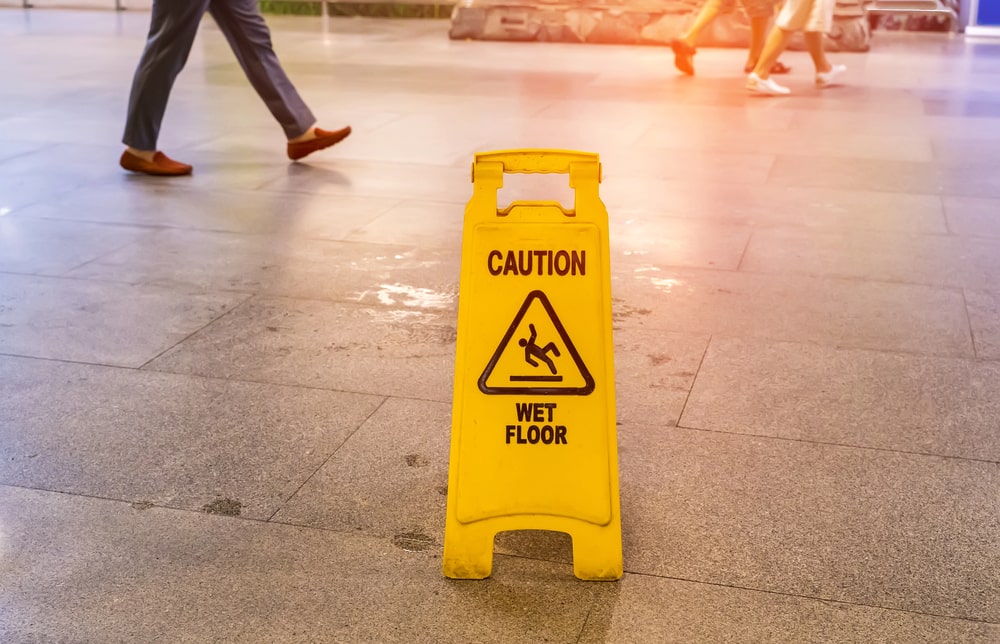
- Wet floor accidents. Spilled liquids, freshly mopped surfaces without warning signs, and leaking refrigeration units in grocery stores and restaurants cause some of the most common falls. Florida law requires the injured person to prove the business knew about the hazard or that it existed long enough that they should have discovered it.
- Uneven surfaces and broken walkways. Cracked sidewalks, raised pavement edges, broken tiles, and potholes in parking lots create tripping hazards that property owners are responsible for maintaining. These cases are especially common in older commercial areas of Fort Lauderdale.
- Inadequate lighting. Stairwells, hallways, parking garages, and outdoor walkways that aren’t properly lit create conditions where a person cannot see a hazard until it’s too late. When a property owner fails to maintain adequate lighting and a visitor falls, the owner may be liable.
- Stairway and escalator falls. Missing handrails, loose steps, worn treads, and broken escalators in shopping centers and office buildings cause serious falls that frequently result in broken bones, head trauma, and back injuries.
- Slip and fall on another’s property. Residential properties, rental units, and private homes with hazardous conditions can also give rise to premises liability claims. Landlords have a duty to maintain safe common areas, repair known defects, and warn tenants and visitors about dangers they cannot immediately fix.
- Swimming pool accidents. Fort Lauderdale’s climate means pools are everywhere, from residential complexes to hotels to public facilities. Slippery pool decks, broken fencing, missing drain covers, and inadequate depth markers are all potential sources of liability.
- Theme park and attraction injuries. South Florida draws millions of visitors each year to attractions, resorts, and entertainment venues. When a fall occurs on those premises due to negligent maintenance, the property operator can be held accountable.
- Construction site hazards. Debris, exposed wiring, open trenches, and missing barricades on active construction sites can cause falls that produce catastrophic injuries. These cases may involve multiple liable parties, including the general contractor, subcontractors, and the property owner.
Florida Legal Requirements for Slip and Fall Claims
Florida’s premises liability laws put a real burden on the injured person, and understanding those laws early in the case makes a significant difference.
Under Florida Statute § 768.0755, if you slip and fall on a transitory foreign substance in a business, you must prove that the business had actual or constructive knowledge of the dangerous condition and should have taken steps to fix it. Constructive knowledge can be shown by evidence that the hazard existed long enough that the business should have found it during reasonable inspections, or that the condition occurred with enough regularity that it was foreseeable. This is a higher standard than many people expect, and it’s why preserving evidence immediately after a fall is so important.
The statute of limitations under Florida Statute § 95.11 gives you two years from the date of the fall to file a negligence-based lawsuit. House Bill 837, signed in March 2023, cut that deadline in half from four years. Two years may feel like enough time, but gathering surveillance footage, maintenance logs, incident reports, and witness statements needs to happen quickly. Businesses often overwrite security camera footage within days or weeks.
Florida’s modified comparative negligence rule under § 768.81 means that if you’re found more than 50% at fault for your fall, you recover nothing. Insurance adjusters frequently argue that the injured person was distracted, wearing inappropriate footwear, or should have seen the hazard. Our job is to build a case that puts the focus where it belongs: on the property owner who failed to maintain a safe environment.
What Damages Are Recoverable in Fort Lauderdale Slip and Fall Cases?
Falls may look minor from the outside. They are often anything but. According to the CDC, falls are the leading cause of injury among older adults, generating approximately 3 million emergency department visits each year nationally. And fall injuries affect people of all ages. A 30-year-old who slips on a wet floor in a Fort Lauderdale grocery store and tears a ligament in their knee faces surgery, months of physical therapy, and potentially permanent limitations.
Economic damages include every documented cost. Emergency room treatment, orthopedic surgery, imaging, prescription medication, physical therapy, chiropractic visits, and follow-up appointments. Lost wages from time you missed at work. Reduced earning capacity if the injury changes what you’re able to do. Transportation costs. Home health aides if you need assistance during recovery. These are calculated with records and, in serious cases, with the help of medical and financial professionals.
Non-economic damages cover the human toll. Pain and suffering, mental anguish, loss of enjoyment of activities, embarrassment, scarring, and the frustration of dealing with a painful recovery caused by someone else’s negligence. A person who can no longer walk without discomfort, who avoids public places out of anxiety, or who lost months of their life to rehabilitation has suffered real harm.
Punitive damages are rare in slip and fall cases, but they exist. Under Florida Statute § 768.72, if the property owner’s conduct amounted to intentional misconduct or gross negligence, punitive damages may apply. A landlord who repeatedly ignores warnings about a collapsed staircase, for instance, could face punitive liability. These damages are meant to punish the behavior, not compensate the victim.
Contact Loshak Law PLLC
Loshak Law PLLC offers free consultations and handles every slip and fall case on contingency. You pay nothing unless we recover compensation for you. Contact us to schedule a case review with a slip and fall attorney in Fort Lauderdale who will give you an honest assessment of your claim and explain what comes next.
Fort Lauderdale Slip and Fall Statistics
 Falls send a steady stream of people to emergency rooms across Broward County, and the numbers behind a Fort Lauderdale slip and fall case help explain why these claims deserve careful attention. In Florida, unintentional falls are the leading cause of fatal and non-fatal injuries among residents 65 and older, and Florida Department of Health records show 3,848 older Floridians were fatally injured in falls in a single recent year. Younger adults face real risk too, which is why the national picture matters as much as the local one. The National Safety Council reports that more than 8.8 million people were treated in emergency departments for fall-related injuries in 2023, and over 48,000 died in falls at home and at work the following year. Slips, trips, and falls also remain one of the most common causes of serious workplace injury, according to the Bureau of Labor Statistics, which matters on the commercial properties where many Fort Lauderdale slip and fall injuries happen.
Mistakes That Can Damage Your Fort Lauderdale Slip and Fall Claim
Premises liability claims are won and lost on details, and many of those details are settled in the hours and days right after the fall. Most people who get hurt are not thinking about evidence or filing deadlines. They are thinking about the pain, which is understandable. A few avoidable errors can still shrink a settlement or sink a claim entirely. The common mistakes below come up again and again, and steering clear of them puts a slip and fall attorney in Fort Lauderdale in a far stronger position to fight for you.
- Putting off medical care. A gap between the fall and your first doctor visit hands the insurance company an opening to argue your injuries came from something else. Prompt medical treatment creates a record that ties the injury to the fall, and federal health information confirms that falls can cause everything from bruising to fractures and serious head injuries, even when symptoms feel mild at first.
- Letting the scene disappear. Spilled liquid gets mopped. A broken tile gets replaced. Surveillance footage is often recorded over within days. Photographs of the hazard, the lighting, and the shoes you were wearing, taken before anything changes, can carry a case.
- Saying too much to the adjuster. Insurance representatives sound friendly, then use your words against you later. A recorded statement given before you understand your injuries can lock you into a version of events that works against your recovery. Our firm deals with insurance adjusters so you are not left guessing what is safe to say.
- Skipping the incident report. If you fall in a store, restaurant, or hotel, ask a manager to document it in writing and request a copy before you leave. Reporting the fall and moving to hold property owners accountable starts the paper trail that a claim depends on.
- Posting about it online. A cheerful photo or an offhand comment about feeling fine can be pulled into the case and used to question how hurt you really are. Social media posts have quietly undermined more claims than most people realize.
- Going it alone and assuming the fall was your fault. Trying to document your injuries and argue the claim without help often leaves money on the table, and what looks like your own misstep is frequently a maintenance failure the owner should have caught. A short conversation with a slip and fall lawyer in Fort Lauderdale, FL costs nothing and tells you whether the claim is worth pursuing.
Fort Lauderdale Slip and Fall Lawyer FAQs
How much does a Fort Lauderdale slip and fall lawyer cost?
Our firm handles slip and fall cases on a contingency fee basis, which means you pay no attorney fee unless we recover compensation for you. There is no retainer and no hourly billing. The initial consultation is free. We advance the costs of investigating your claim, and our fee comes out of the recovery at the end, so you are never asked to write a check up front to move your case forward.
Is the consultation really free?
Yes. We offer a free, no-obligation case review for every slip and fall claim in Fort Lauderdale, FL. You can ask questions, describe what happened, and get an honest read on whether you have a case before deciding whether to hire anyone. If we are not the right fit, we will tell you. There is no pressure and no cost to simply find out where you stand.
How long do I have to file a slip and fall lawsuit in Florida?
Florida law generally gives you two years from the date of the fall to file a negligence lawsuit, under the state’s statute of limitations. That window is shorter than it used to be, and waiting can cost you the claim entirely. Evidence also fades fast, so contacting a slip and fall attorney in Fort Lauderdale soon after the injury protects both your deadline and your proof.
What if the fall was partly my fault?
You may still recover. Florida follows a modified comparative negligence rule, which reduces your compensation by your share of fault and bars recovery only if you are found more than half responsible. Property owners often exaggerate the injured person’s role to cut what they pay. Proving negligence against the owner, and pushing back on inflated blame, is a central part of what we do.
What is my slip and fall case worth?
It depends on the severity of your injuries, your medical bills, your lost income, and how the fall has affected your daily life. A sprained wrist and a fractured hip are not the same claim. We look at current and future treatment, time missed from work, and the pain you have lived through. No honest lawyer can promise a number early, but we can explain the range based on cases like yours.
How long does a slip and fall case take?
Some resolve in a few months. Others take longer, particularly when injuries are serious or the property owner disputes liability. A case usually moves faster when the evidence is strong and treatment is complete, because settling before you know the full extent of your injuries can leave money behind. We keep you updated at each stage rather than leaving you wondering.
What if the store says the floor was marked or the hazard was obvious?
That is one of the most common defenses, and it does not end the case. A warning sign placed too late, in the wrong spot, or after a spill sat for an hour may not protect the owner. Witness statements and the timeline of when the hazard appeared often matter more than a yellow cone. We investigate what the property knew and when it knew it.
Do I really need a lawyer for a slip and fall in Fort Lauderdale?
For a minor incident with no lasting injury, maybe not. But once there are medical bills, missed work, or a disputed cause, the property’s insurer is already building its defense. Choosing the right injury lawyer levels the field. Premises cases are among the harder personal injury claims to prove, and experience handling them in Fort Lauderdale, FL makes a measurable difference.
Local Information for Fort Lauderdale Slip and Fall Cases
Where and how a fall happens in Fort Lauderdale shapes the claim. The city’s mix of older commercial blocks, heavy tourist traffic, and year-round wet weather creates fall hazards that local property owners are responsible for managing.
Most Dangerous Locations for Slips and Falls in Fort Lauderdale
Falls can happen anywhere, but a few Fort Lauderdale settings see more than their share:
- Las Olas Boulevard. Decades-old brick sidewalks, uneven pavers, and crowded restaurant patios create trip hazards along this busy corridor.
- Fort Lauderdale Beach and the promenade. Wet walkways, sand-dusted tile, and sloped access points stay slick, especially after rain or near outdoor showers.
- Downtown parking garages. Oil slicks, dim lighting, unmarked steps, and rainwater that blows in during storms make these structures a frequent source of falls.
- Grocery stores and big-box retailers. Spills, freshly mopped aisles without signage, and produce-section runoff lead to some of the most common premises claims.
- Hotel and resort lobbies. High-polish floors, entry mats that bunch up, and water tracked in from outside catch visitors off guard.
Important Local Resources for Fort Lauderdale Slip and Fall Victims
If a fall has left you hurt, a few local offices can help you get treated and start documenting what happened:
- Broward Health Medical Center, (954) 355-4400. A public hospital with a Level I trauma center and emergency care for serious fall injuries.
- Holy Cross Health, (954) 771-8000. A full-service hospital with a 24-hour emergency department serving northeast Fort Lauderdale.
- Fort Lauderdale Police Department Records Unit, (954) 828-5465. The source for incident and accident reports when officers responded to your fall.
Loshak Law PLLC provides these contacts for convenience only. We do not endorse, and we have no affiliation with, these organizations, and listing them is not a recommendation or a guarantee of their services.
About Loshak Law PLLC
Loshak Law PLLC is led by founding attorney Brandon F. Loshak, who is admitted to practice in both Florida and Texas and is a member of the Broward County Bar Association. Our firm brings more than 13 years of experience to premises liability and personal injury matters across Broward County, and we have recovered millions of dollars for injured clients. Mr. Loshak built the firm around steady, client-focused representation, and he holds his slip and fall cases to the same standard: thorough investigation, careful documentation, and a refusal to settle for less than a claim is worth.
What Our Clients Say About Loshak Law PLLC
★★★★★
“Loshak Law Firm Injury Lawyers are great! From start to finish, they were professional, compassionate, and incredibly knowledgeable. They kept me informed every step of the way, fought hard for my case, and truly cared about getting the best outcome possible. I felt supported and confident knowing I had such a dedicated team on my side. Highly recommend!” – Lauren Edlund
Read more reviews on our Google Business Profile.
Contact Loshak Law PLLC
If a fall on someone else’s property has left you injured in Fort Lauderdale, our firm is ready to help you understand your options. A slip and fall lawyer in Fort Lauderdale, FL will review what happened, explain whether you have a claim, and lay out the next steps in plain language. The consultation is free, and we work on contingency, so you owe no fee unless we win. We answer calls promptly and will tell you honestly where your case stands. Contact us to schedule your free case review.