
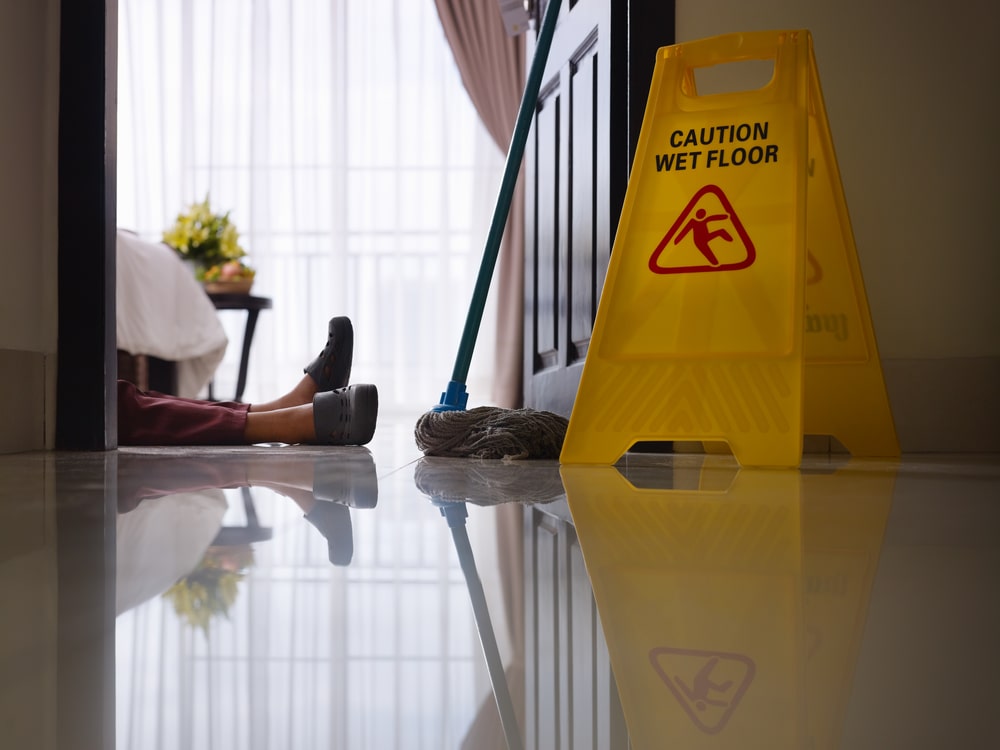
Falling on someone else’s property doesn’t automatically mean that property owner owes compensation. Florida law requires injured people to establish specific elements before a premises liability claim succeeds. Understanding what those elements are and what evidence supports each one is foundational for Margate area slip and fall victims who want to recover what their injuries actually cost.
How Florida Categorizes Visitors and What That Means for Duty of Care
Florida premises liability law establishes different duties of care based on why a person was on the property at the time of the injury. That categorization affects what the property owner must do, and what the injured person must prove.
Invitees receive the highest level of protection. A business invitee is someone who enters commercial property for a business purpose, such as a customer at a Margate retail store, restaurant, grocery store, or shopping center. Property owners owe invitees the duty to maintain the premises in a reasonably safe condition, to discover hazardous conditions through reasonable inspection, and to either correct dangerous conditions or warn visitors about them.
Licensees enter with the property owner’s permission but for their own purposes rather than a business purpose. Social guests fall into this category. Property owners must warn licensees of known dangers that the licensee wouldn’t discover through ordinary care, but don’t have the same affirmative duty to inspect and discover hazards that applies to invitees.
Trespassers generally receive the least protection, though Florida still imposes liability in some circumstances, particularly involving children under the attractive nuisance doctrine.
For most Margate slip and fall cases involving commercial properties, the invitee standard applies. That creates meaningful obligations for property owners and meaningful rights for injured visitors.
What Constructive Notice Requires in Florida Slip and Fall Cases
Florida’s premises liability statute for transitory foreign substances, Florida Statute § 768.0755, requires a slip and fall plaintiff to prove that the business establishment had actual or constructive knowledge of the dangerous condition and should have taken action to remedy it.
Constructive knowledge can be established by showing either that the condition existed for a sufficient length of time that the business should have known of it through the exercise of ordinary care, or that the condition occurred with regularity and was therefore foreseeable.
This is where most Margate slip and fall cases turn. An insurer defending a fall at a Broward County grocery store will argue that the spill was too fresh for staff to have reasonably discovered and addressed it. A plaintiff’s attorney will counter with evidence about how long the condition actually existed before the fall.
The evidence that establishes how long a hazard existed includes surveillance footage showing when a spill occurred or was visible, inspection logs that reveal how recently the area was checked, employee testimony about maintenance schedules, and the physical state of the substance itself at the time of the fall. A dried or footprint-tracked spill looks different from a fresh one, and that visual difference is evidence of duration.
A Margate slip and fall lawyer acts quickly to preserve surveillance footage and inspection documentation before the property owner’s routine data retention schedule eliminates it.
How Florida’s Modified Comparative Negligence Affects Slip and Fall Claims
Florida adopted a modified comparative negligence standard under HB 837, signed in March 2023. The law bars recovery entirely when the plaintiff is found more than 50% at fault for their own injuries.
Property owners and their insurers raise contributory fault arguments against Margate slip and fall victims regularly. Common arguments include that the hazard was open and obvious, that the plaintiff was distracted, that the plaintiff was wearing inappropriate footwear, or that the plaintiff ignored warning signs that were present.
Each of these arguments is designed to push the fault percentage above 50%. Countering them requires evidence that the hazard was genuinely concealed, that no adequate warning was provided, and that the plaintiff’s conduct was reasonable given the circumstances. The strength of that evidence directly affects what the claim is worth.
What Evidence Matters Most in a Margate Slip and Fall Case
Several categories of evidence consistently determine slip and fall outcomes in Broward County:
- Surveillance footage from the premises showing when the hazard appeared and how long it was present before the fall
- Incident reports filed with the property owner on the date of the fall
- Photographs of the hazardous condition taken at the scene
- Witness accounts from people who observed the fall or the condition beforehand
- Medical records connecting the injuries to the fall and documenting their severity
- The property’s inspection and maintenance logs showing when the area was last checked
Time sensitivity is real. Surveillance footage is often overwritten within 30 to 60 days. Acting promptly after a Margate area fall to identify and preserve this evidence is one of the most important early steps in a premises liability case.
Loshak Law PLLC has represented seriously injured South Florida residents for more than 13 years, with an AV Preeminent rating and multiple million-dollar recoveries reflecting the quality of representation the firm provides. If you were injured in a slip and fall at a Margate area property and want to understand what Florida premises liability law requires and how to prove it, reach out to a Margate slip and fall lawyer to discuss the circumstances and find out what your claim is worth.